Curriculum (IGCSE)
At The Writing Studio, our IGCSE English programme is designed to develop comprehensive language proficiency across all four skills: reading, writing, speaking, and listening.
The curriculum emphasizes critical analysis of literary and non-literary texts, mastery of creative and transactional writing, and effective communication for diverse audiences. Students engage in structured practice, evidence-based analysis, and targeted feedback, ensuring they achieve both exam excellence and academic fluency.
FOCUS POINTS OF IGCSE ENGLISH
Writing: Express ideas clearly through creative and transactional writing
Speaking: Build confidence, fluency, and clear communication
Listening: Improve comprehension, interpretation, and response skills
Critical Thinking: Analyze ideas, context, and author’s purpose
Exam Readiness: Practice questions, structured responses, and regular feedback
Information: Beyond the original design
Coherent presentation: Present ideas in a clear and logical way
Individual flair: Show originality and personal style
Thorough interpretation: Give detailed and accurate interpretations
Reasoned explanations: Support ideas with reasoned explanations
Original aims to reach conclusion
Include critical and simple evaluations
Tentative conclusions: Make careful, balanced conclusions
Range of techniques
Derivations and developments: Develop ideas step-by-step



Select your board:
Reading
Develop strong reading comprehension skills
Analyze literary and non-literary texts
Identify themes, ideas, and author’s purpose
Speaking & Listening
Participate in discussions, presentations, and debates
Improve pronunciation, fluency, and expression
Organize ideas clearly while speaking
Develop active listening and response skills
Strengthen note-taking and interpretation abilities
Key Components of the IGCSE English Curriculum
Writing
Practice descriptive, narrative, and transactional writing
Improve vocabulary, grammar, and sentence structure
Learn to write for different purposes and audiences
Assessment Components
Follows a structured school curriculum aligned with IGCSE
Assessed through classwork, assignments, and examinations
Reading and writing tested through text-based responses
Speaking and listening assessed through oral activities and presentations
Writing and Tasks in IGCSE
Comprehensions, Writers assets, Summary writing, Directive writing, Letter writing, Article, Speech, Interview, Report writing, Dairy entry, Journal entry, Persuasive letter, article and speech, Narrative and Descriptive Essay
IGCSE First Language English – Exam Overview
The IGCSE First Language English examination consists of Paper 1 and Paper 2, each carrying 80 marks.
In both papers, 66% of the marks are awarded for writing style, while the remaining 34% are based on content.
Paper 1: Reading and Directed Writing
Paper 1 includes:
Comprehension
Directed writing
Continuous writing
Writer’s effects
Writer’s attitudes
Paper 2: Writing
Paper 2 focuses on:
Persuasive writing (article, letter, or speech)
Narrative or descriptive writing
Key Expectations
All components in both papers require careful reading, accurate interpretation and effective application of the question requirements.
Students are expected to use their own words at all times and must avoid copying phrases directly from the text. This makes the examination particularly challenging, as students must read, plan and write clearly within a limited time of two hours.
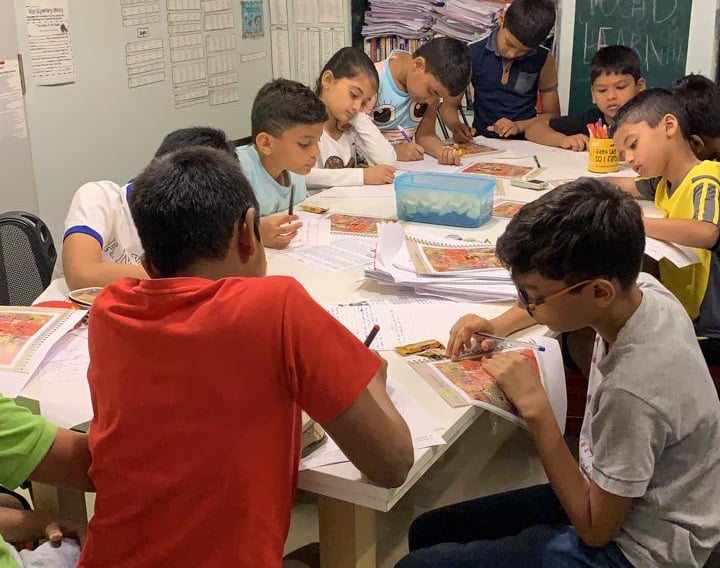
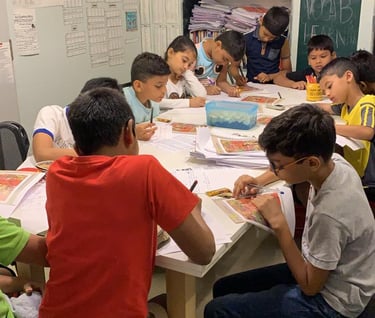
Across all boards, special attention is given to:
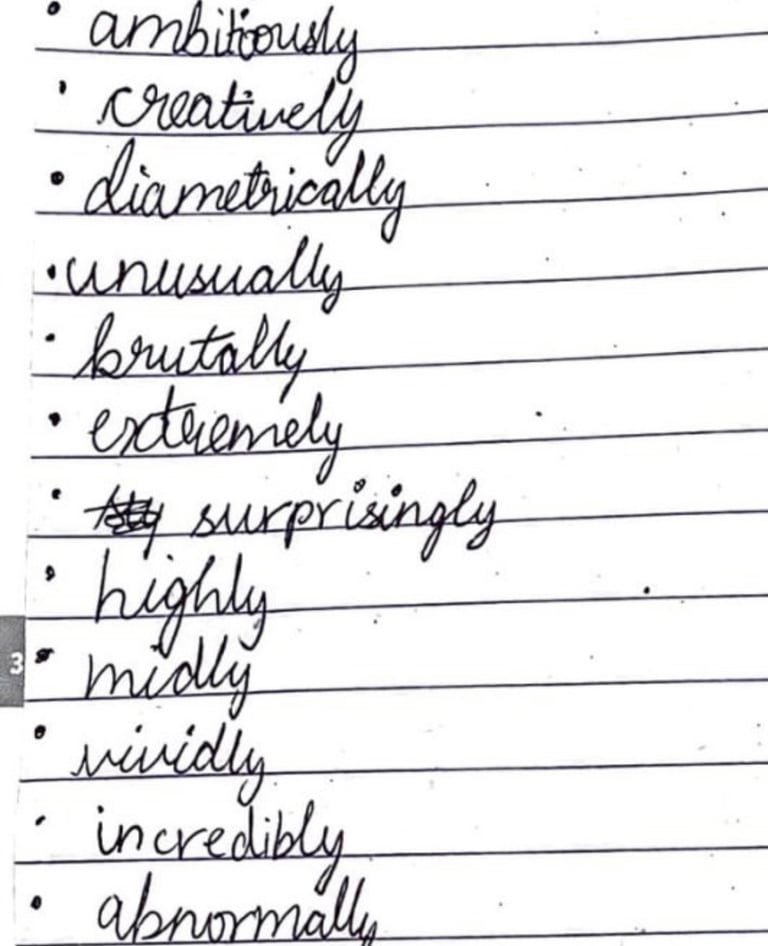
Vocabulary Enhancement | Grammar Accuracy | Writing skills | Pronunciation and Spoken English
In IGCSE English, storytelling builds narrative with characters, conflict, and resolution, while descriptive writing creates vivid imagery through sensory detail and atmosphere. Narrative answers what happens; description explores how it feels. Examiners reward originality, precision, and “show, don’t tell.” Blending both styles makes writing engaging and memorable.
“Before joining, I often felt lost when analyzing texts. I couldn’t see the connections between themes, context, and author’s purpose. I was taught how to break down texts step by step, guiding me through close reading and critical analysis. Now, I can approach essays with confidence, structure my arguments clearly and even enjoy discussions about literature. It’s made a huge difference in both my IGCSE grades and my overall understanding of English.”
Nina D'souza
★★★★★
“My son has always been a bright student, but IB English felt overwhelming. At The Writing Studio, the combination of structured lessons, discussion-based learning, and regular practice has helped him excel not just in exams, but in understanding and interpreting texts independently. The teachers also focus on oral skills, which has greatly boosted his confidence in presentations.”
Anil S.
Student Says
Parent Says
★★★★★
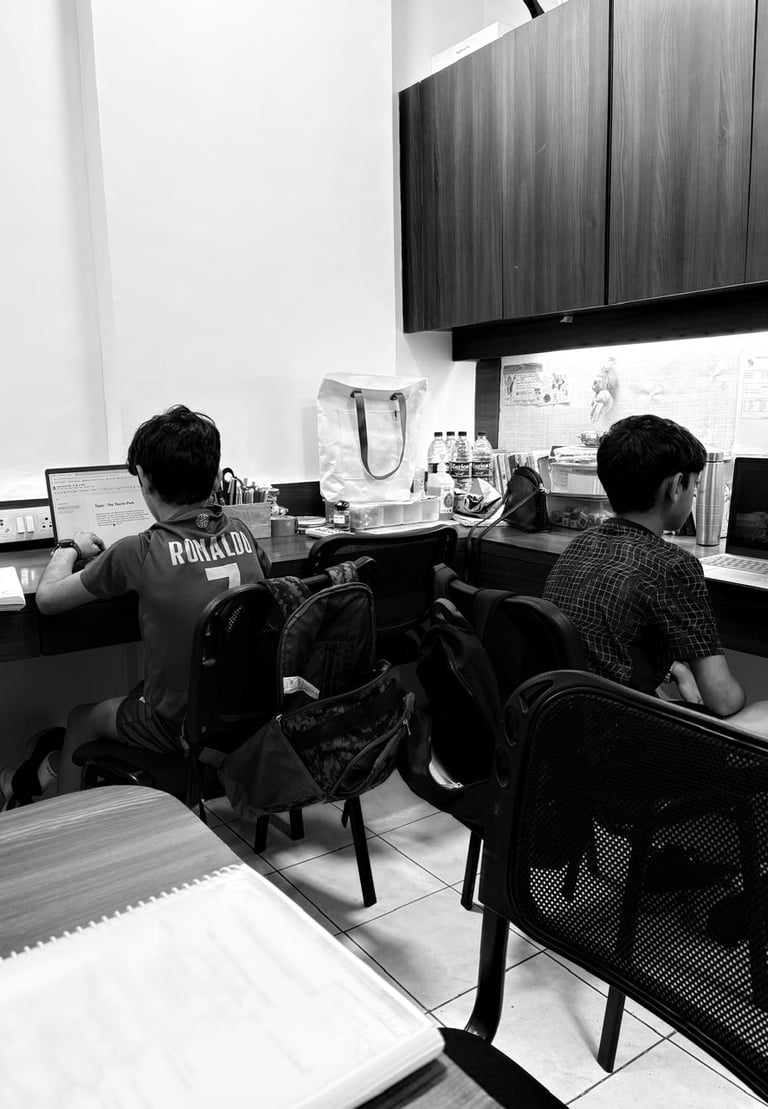
Why English Classes Are Essential for Students
Global Communication
English is the most widely spoken language worldwide, serving as a bridge across cultures and countries. Students who learn English can access international media, collaborate with peers globally, and participate in cross-cultural conversations.
Academic Success
Many textbooks, research papers, and online resources are published in English Vedantu. Proficiency in English helps students excel in subjects beyond language—science, technology, and humanities often rely on English materials. Exams like IELTS, TOEFL and SAT require strong English skills for admission to universities abroad.
Career Opportunities
English is the dominant language in business, technology, and international trade. Employers value candidates who can write professional emails, deliver presentations, and negotiate in English.
Critical Thinking & Creativity
English classes go beyond grammar—they teach analysis, persuasion and interpretation learn-to-speak. Students learn to evaluate literature, craft arguments, and express ideas clearly, which strengthens problem-solving skills.
Challenges & Considerations
• Overemphasis on English can sometimes overshadow local languages and cultural identity.
• Students may feel anxiety or pressure if English is taught rigidly rather than joyfully.
The best approach at The Writing Studio is that of a balanced teaching, valuing English as a tool while respecting native languages.
Contact Us
You can also use the contact form below to share your requirements, grade, and board—and we’ll get back to you shortly.
Phone: +91 98209 41662
email: contact@thewritingstudio.in
Location: Mumbai
IGCSE English Tutoring – Learn from an Experienced IGCSE English Teacher
Looking for IGCSE English tutors? Our expert mentor Nidhi Gupta teaches structured, result-oriented coaching to help students excel in IGCSE English with confidence.
Power Tutorials for English Language & Literature
Enhance your English skills with expert guidance. IGCSE, IB, A-Levels Tutorials.
the writing studio
The Writing Studio © All rights reserved. 2026
IGCSE, IB, A-Levels English Language | Cambridge Curriculum and Boards | MYP | PYP | IBDP | SL HL Essay Tutorials